UMAM D&R-AHDA Associate to Advocate Historical Dialogue and Accountability


In light of the effort UMAM D&R has invested in expanding its network of regional and international partners, the organization was privileged to accept in June 2011 an invitation by the Institute for the Study of Human Rights at New York’s Columbia University to join its Alliance for Historical Dialogue and Accountability (AHDA). This unique body seeks to promote exchange among scholars, advocates, civil society organizations, journalists, educators, artists and policy makers dedicated to cultivating historical dialogue and accountability in conflict, post-conflict and post-dictatorial societies worldwide. UMAM looks forward not only to joining this network, but also to engaging in comparative and interdisciplinary dialogue with its fellow AHDA members.

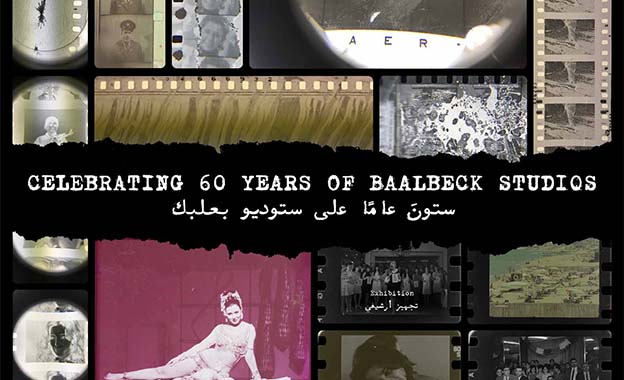
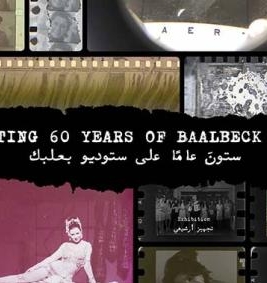
Rohit Goel, UMAM’s academic affairs officer, participated via Skype in AHDA’s December 2011 conference “Historical Dialogue and Accountability: Scholarly and Advocacy Perspectives,” which was held in Bonn, Germany. During the teleconference, Goel presented case studies of UMAM’s ongoing archival and analytical work, such as the organization’s recent efforts to categorize and interpret materials from its Carlton Hotel and Studio Baalbek archival collections. He also discussed ongoing Lebanese efforts to develop a unified history textbook during a question and answer session attended by representatives from AHDA’s other member organizations including the Association for Historical Dialogue and Research (Cyprus); Anadolu Kültür (Turkey); the Center for History, Democracy and Reconciliation (Serbia); Documenta: Center for Dealing with the Past (Croatia); the Institute for Applied History (Germany); Listening between the Lines (USA); Seyfo Center (USA) and Zochrot (Israel).

UMAM D&R is eager to continue working with AHDA and its member organizations. As a fellow member, we hope to share solutions to the practical challenges we encounter, advance the use of historical dialogue and accountability as mechanisms for reconciliation, facilitate valuable interdisciplinary and international exchange on the related topics of historical dialogue and accountability and help connect like-minded organizations and individuals globally.


Islam and Democracy: Entering a New Phase?


In coordination with Hayya Bina, Dar al-Jadeed Publishing House and the soon-to-be-established Netherlands Institute in Beirut, UMAM D&R hosted the first lecture in the To the Point series. This lecture-debate program focuses on a number of emerging issues in Lebanon and the greater Arab world in an effort to raise social awareness and encourage civic participation among Lebanese citizens. The presentation on “Islam and Democracy: Entering a New Phase?” was given December 9 by Dutch scholar Dr. Maurits Berger at UMAM D&R’s multifunction, multiplatform facility, The Hanger, located in Haret Hreik.
Dr. Berger, a full Professor at Leiden University in the Netherlands, holds the Sultan of Oman Chair for Oriental studies and serves as a senior research associate with the Clingendael Institute for International Relations in The Hague. Aside from having worked as a lawyer in Amsterdam, he spent seven years in Cairo and Damascus as a researcher and journalist. Engaged completely in European debates and policy studies that center on the Arab world and Muslims in the West, Dr. Berger’s research focuses on political Islam and freedom of religion.
During the past ten years, the desire for democracy among Arabs became increasingly apparent; however, those “indications” became apparent as the Arab Spring progressed throughout the region. While very little was said about Islam during the revolts, references to it began appearing in various forms as the clashes subsided. In his lecture, Dr. Berger argued that since Arab nations had already been “Islamized,” there was nothing to be gained by spotlighting Islam during the 2011 revolutions. According to him, the real question surrounding the tumult is now that Arabs have obtained the two outcomes for which they strived so ardently—democracy and Islam—how will the two interact?
Dr. Berger’s stimulating presentation was attended by a very diverse audience which included the Danish and Dutch ambassadors to Beirut and a host of eminent clerics, intellectuals and Lebanese youth. The length and degree of participation in the debate that followed, moderated by Hassan Abbas, reflected the general interest in and the timeliness of the discussion topic.


Prison situation discussed during a meeting at The Hangar


UMAM D&R and Hayya Bina believe the unification of civic elements represents a crucial first step toward tackling the problems that continue to plague Lebanon’s prison and judicial systems and improving respect for human rights nationwide. The two organizations demonstrated their commitment to human rights and democratic reforms in Lebanon yet again when they hosted a follow-up meeting in The Hangar, UMAM D&R’s multifunction, multiplatform facility in Haret Hriek, to enhance the affiliation sparked by previous efforts to address prison issues. The attendees included prominent human rights activists and organizations, relatives of detainees and representatives of Islamist prisoners. The group released a statement published the day after, December 14, in several Beirut newspapers. In it, they confirmed their “support for the prisoners engaged in peaceful hunger strikes and refusal to overlook further violations against prisoners and security conditions.” They also promised to “open communications with prominent political and spiritual leaders, parliamentary blocs and relevant committees” on the matter. Read more...
 
 
UMAM by UMAM


As an organization dedicated to the restoration of memory, UMAM Documentation and Research (D&R) utilizes a number of means to achieve that end, particularly by remaining invested in the world of art. The organization’s in-house venue known as The Hangar has hosted innumerable art exhibitions, film screenings and debates since its inaugural program in April 2005. Thus, we at UMAM D&R were excited by the invitation to participate in the Designing Civic Encounter forum hosted by ArtTerritories.

The “encounter,” conducted in Ramallah from July 21 – 24, 2011, was exactly the kind of engagement that appeals most to UMAM D&R. The discussions would focus on existing and potential forms of urban development and public culture with attendees participating in a two-day symposium that examined urban transformations in Palestine and other Arab cities relative to current trends in planning, finance and construction practices. Since logistical considerations prevented UMAM D&R’s appearance at the event, the organization responded by producing a documentary that allowed it to participate in absentia.

While the film was intended for screening during the Ramallah forum, UMAM D&R prefers to consider it the product of an audiovisual exercise with which it can solicit helpful and informative comments and feedback from friends. The brief documentary addresses the inception of UMAM D&R, its organizational philosophy and its past and present endeavors. More to the point, it centers on the organization’s archival efforts and use of The Hangar as an independent platform to facilitate debate and interpersonal exchange.

To view the clip, click
here.


Once upon a time… the Beirut Carlton Hotel


On the large avenue leading from the airport to the city along the sea-shore, the Carlton spreads its facade along the corniche which surrounds the new residential parts of Beirut. The Carlton was constructed in such a manner that all rooms face the sea giving equal opportunity to enjoy the splendid scenery….

This is how one particular Web site, which doesn’t appear to have been updated for at least two years, describes Beirut’s old Carlton Hotel. Opened in February 1960, while this landmark truly exemplified the Beirut scene, it perished (or rather, was assassinated) during Beirut’s ongoing urban slaughter. At the end of 2008, the hotel was purchased by a real estate developer who sought to reinvent it as an extravagant residential compound comprised of three towers.

Among the very few articles that offered an obituary to this unique landmark, one described it as “the meeting [place] of politicians, [a home to] journalists, and a stronghold of intellectuals and revolutionaries” (Asharq Alawsat, December 5, 2008). But as generous as the observation is, it tells but a small part of the building’s story. We certainly cannot forget that the Carlton was one of the laboratories for social life and its advancement in Lebanon.

Thanks to a serendipitous coincidence that occurred while the building was being prepared for demolition, UMAM D&R was able to retrieve several tons of documents before it was lost forever. While this collection has not yet been sorted out (which makes it quite challenging to sift through, organize, catalogue and add individual pieces to our archive), it remains a uniquely eclectic resource. Notably, its assets range from tedious bureaucratic data to amusing day-to-day information, and the items provide an interesting glimpse into social life at different times in Lebanon’s history. Yet without having conducted a methodical examination of this find, we do not know yet what surprises it may reveal. Thus, we invite everyone interested to help UMAM D&R analyze this archive and make it available to a wider audience.

The Last Days of the Carlton Hotel (photo gallery)

More about UMAM’s Collection


After Evil: A Politics of Transitional Justice
THE HANGAR, Summer Seminar Series, 2011
Coordinator: Rohit Goel
UMAM D&R | University of Chicago

Fifteen Lebanese scholars, writers, artists, and cultural critics will meet once weekly to discuss the theoretical literature on “transitional justice” and examine how, after the fall of the Soviet Union, scholars and citizens in “post-conflict” societies have framed evil as something of the past, justice as something of the future, and the present as a time between wrong and right. Using the Nazi Holocaust, “post”-apartheid South Africa, and “post”-war Lebanon as case studies, the group will decipher the political effects—on nationalism, sovereignty, capitalism, and citizenship—of this strange, post-Cold War temporality of evil and justice, when evil’s end does not require the onset of justice.
 
 
Veterans all and some…To the  Death
A civil war veteran and former Member of Parliament explained: “most Lebanese participated in the war. Participation… was never an issue.” During its What is to Be Done? Lebanon’s War-Loaded Memory initiative, UMAM D&R saw that the issue of former combatants needed attention despite persistent sensitivities and challenges, and commissioned Statistics Lebanon Ltd. to query veterans from each “camp.” Reviewed initially during a 2008 focus group, the final product explains something about who fought, why, and how they view their actions.
Notable veteran Assaad Chaftari saw the predictive value of the effort, especially since many veterans were integrated into the army and other governmental bodies after the war. But while we believe the results give Lebanon’s history more comprehensiveness and transparency, we also believe they should be judged only on how well they achieve that purpose.[Read more...]


BOOKS FROM THE BATTLEFIELD
Exhibition
April 20, 2010
 
In the wake of the work done by UMAM D&R, our intent in Books from the Battlefield is to challenge the platitudes (and hence, mainstream public opinion) which position the concepts of “war” and “culture” at opposite and irreconcilable ends of the spectrum. In this project, we attempt to elucidate the association betweenLebanon and written works against the backdrop of war. In such an endeavor, UMAM D&R’s vision has always been to ponder, contend with, and sometimes revise our recent history—even its most painful and shameful episodes—both openly and honestly. Indeed, only by doing so can we finally come to terms with this part of our “past.” More specifically, Books from the Battlefield seeks to explore the role played by “cultural production” during the war (especially in book form), and the influence it may continue to exert in view of the recent spate of epiphanies as well as the physical and symbolic “reincarnations” of the war.


MULTIFACETED PROJECTS
 
What is to Be Done?
 
Missing
 
The "War" through its Memorials
 
UMAM D&R commenced its multi-year, multi-partner initiative titled What is to Be Done? Lebanon’s War-Loaded Memory in April 2008. Through a series of publications, exhibitions, film screenings and workshops that attracted international experts, this initiative succeeded in arousing a deeper, more comprehensive debate about Lebanon’s war-loaded memory. The project was intended to contextualize persistent injustices as well as the problematic nature of Lebanon’s “postwar” reality. Most importantly, this undertaking sought to pave the way for a more viable civil peace. Fortunately, the program stimulated a number of pivotal and ambitious follow-up activities that are currently being pursued in Beirut and the surrounding regions. To facilitate this, UMAM D&R must cross geographic borders in order to engage with people and organizations that share its values.
 
 
Beyond the theoretical debate on missing persons, UMAM D&R considers it essential to utilize creative approaches to foster public awareness about the magnitude and impact of enforced disappearance on Lebanese society. Over time, it seems the more resolved we became about the non-existence of those who disappeared, the easier it became for us to ignore our responsibility to conduct effective investigations into their continued and painful absence. In response to the general conclusion “if it cannot be seen it cannot be real,” UMAM-D&R’s exhibition, Missing, is comprised entirely of photographs. It includes pictures of hundreds of individuals from diverse confessions, origins, political persuasions and sex, all of whom disappeared during the Lebanese civil war(s). The exhibition attempts to reanimate those who have disappeared and tie them to our reality, both as individuals and the proportion of the Lebanese population that remains missing.
 
 
Memorials convey substantial information about the Lebanese state itself, the many wars the country has endured and the myriad impressions Lebanese people have of themselves. In some cases, the memorials have been situated to distinguish the otherwise invisible lines that separate parties and communities. Indeed, questions abound regarding the emphasis given to those boundaries, and it matters little whether these are motivated by an imposing monument erected in Beirut to commemorate a dignitary or a more modest memorial placed in a remote village to prevent an obscure martyr from falling into oblivion. While all these memorials seem abstract, they remain elements of Lebanon’s public dialogue.


An electronic platform dedicated to Lebanon’s war-loaded memory
 
 
UMAM COLLECTION
 
A searchable database of UMAM's documentation resources
© 2010 Umam-DR | info@umam-dr.org
NewsLetter